What Does HY Mean In Text? Don’t Get It Wrong Again (2026)
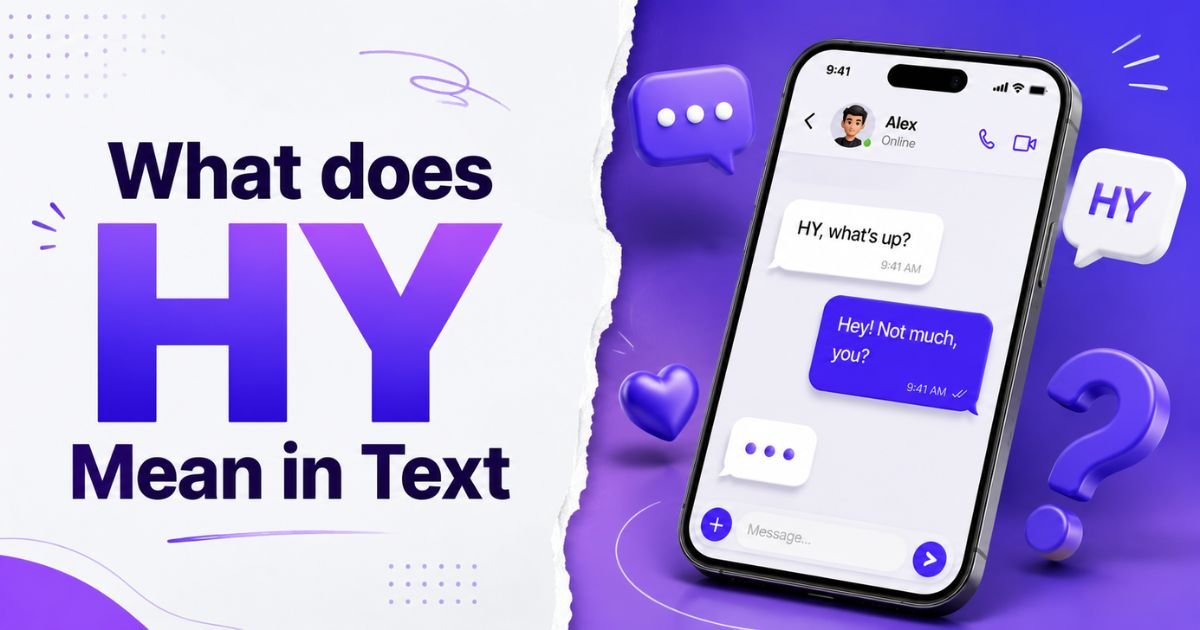
In the fast-paced world of texting, a simple two-letter abbreviation can carry significant weight. The abbreviation “HY” may seem simple, but it’s a great example of how quickly language can change in a digital age.
Commonly used among younger audiences, “HY” can mean anything from “hell yeah” to “hell yes” or “hey” to “hey you” depending on the tone of the conversation.
We’ll unpack what does HY mean in text and why it’s important to understand these shortcuts in today’s communications.
This article breaks down its meanings, looks at examples of how context can alter its use, and reveals pronunciation tips to ensure you understand and use it correctly.
What Does HY Mean In Text: Quick Answer
The abbreviation “hy” in texting means “Hey,” “Hey You,” “Hell Yeah,” or “Hell Yes,” promoting a casual tone in communication. It’s a perfect fit for today’s fast-paced digital interactions, where brevity is crucial. “Hy” effectively conveys informal greetings, facilitating connections without the need for more formal expressions.
This shorthand is particularly popular among Gen Z and millennials who enjoy using texting slang. It can express excitement, akin to “hell yeah or “hell yes,“ transforming a simple greeting into an enthusiastic acknowledgment.
TL:DR
- It can stand for various phrases, primarily “Hey” or “Hey You,” making it a versatile greeting in casual texting.
- It can mean “Hell Yeah” or “Hell Yes,” reflecting enthusiasm or agreement in conversations.
- Its meaning varies significantly based on context; in a chat, it conveys familiarity and warmth, while in DMs or social media, it exudes excitement or affirmation.
- Using HY in texts can streamline interactions, allowing individuals to convey feelings swiftly without lengthy messages.
- It becomes a casual way to connect on platforms like Instagram or TikTok, making interactions feel more personal and approachable.
What Does HY Means in Text?
It can have different meanings depending on context. This texting slang is a fun and casual way to express excitement or agreement.

Example:
Friend: “Are you coming to the party this weekend?”
You: “HY, I wouldn’t miss it!”
Here, it means “Hell Yeah” and showcases excitement or strong agreement.
Example:
“HY, did you finish the project?”
Here, HY works more like “Hey” or “Hey You” as a casual way to get someone’s attention.
HY Definition in Plain English
It’s a casual way to greet someone, often used in texting or online chats. You might see it in DMs, captions, or group messages when someone wants to get someone’s attention without a formal introduction.

HY as “Hell Yeah” or “Hell Yes”
It has evolved beyond its simplistic origins, becoming a dynamic expression of enthusiasm. When someone responds with “HY,” it channels a powerful affirmation reminiscent of the spirited “Hell Yeah” or “Hell Yes.”
This brevity packs an emotional punch, encapsulating excitement and agreement in just two letters.
For example,
Your text: Game night this weekend?
Your friend: HY, count me in!
It’s a stronger response than just a plain “yes,” making those conversations more engaging.
For example:
Your text: I aced my exam!
Your friend: HY! I knew you could do it!
Here it’s a supportive reply that boosts your spirits. It’s all about sharing those feelings and about celebrating moments together, even if it’s through a screen.
HY as “Hey” or “Hey You”
It has emerged as a succinct yet powerful opener in conversations, serving as both a friendly greeting and an attention-grabber. When you send a simple “HY,” it carries an inherent warmth reminiscent of a laid-back, casual “Hey” or an engaging “Hey You.”

For example, you might text, “HY, what are you up to?” or “HY, long time no talk!” It feels light and approachable, making conversations more relaxed.
How to Tell the Meaning from Context
It changes meaning based on context so the easiest trick is checking its placement in the conversation.
| Situation | Best Meaning | Why |
|---|---|---|
| Replying to a plan | “Hell yeah” | Shows you’re excited and say yes |
| Starting a chat | “Hey” or “hi” | Used to say hello |
| Reacting to good news | “Hell yeah” | Shows you’re happy for them |
| With a playful tone | “Hey you” | Feels playful or flirty |
| Work or school chat | Don’t use HY | Sounds too casual |
What Does HY Mean on Snapchat?
HY on Snapchat is a playful and versatile abbreviation that often adds a dash of informality to conversations. Its meaning can vary significantly based on context while it most commonly functions as a casual greeting, akin to “Hey” or “Hey You”.

It might be interpreted as “Hell Yeah” or “Hell Yes,” in a more enthusiastic exchange, capturing excitement and affirmation in a succinct way. This flexibility makes it a handy tool for users navigating the fast-paced world of social media interactions.
When to Use HY
It is a fun and friendly way to start a casual conversation, especially in text messages or DMs on social apps. It’s useful for reaching out to friends, classmates, or even close coworkers when you want to keep things light and relaxed.
If you’re excited to share good news or just want to catch up, dropping an “HY” can set a cheerful tone right away. It can spark playful exchanges and fun replies in group chats, making it easy to connect with your online mutuals.
It helps to create a welcoming vibe. The next time you’re chatting with your siblings or buddies, try using “HY” to add a little extra warmth to your conversation.
When Not to Use HY
Avoid using it in formal messages. When you’re writing work emails, job applications, or any communication with a teacher, clarity is key. Using texting slang or confusing abbreviations can make you seem unprofessional or careless. These communications deserve a clear and respectful tone that “HY” just doesn’t convey.
You wouldn’t want to minimize the significance of your message by using casual language. Striving for clarity not only shows respect but also helps ensure your point gets across effectively. In formal school writing, avoid abbreviations to maintain a polished and thoughtful approach.
HY Examples and Smart Replies
The right reply to an HY message really depends on which meaning of HY is being used.
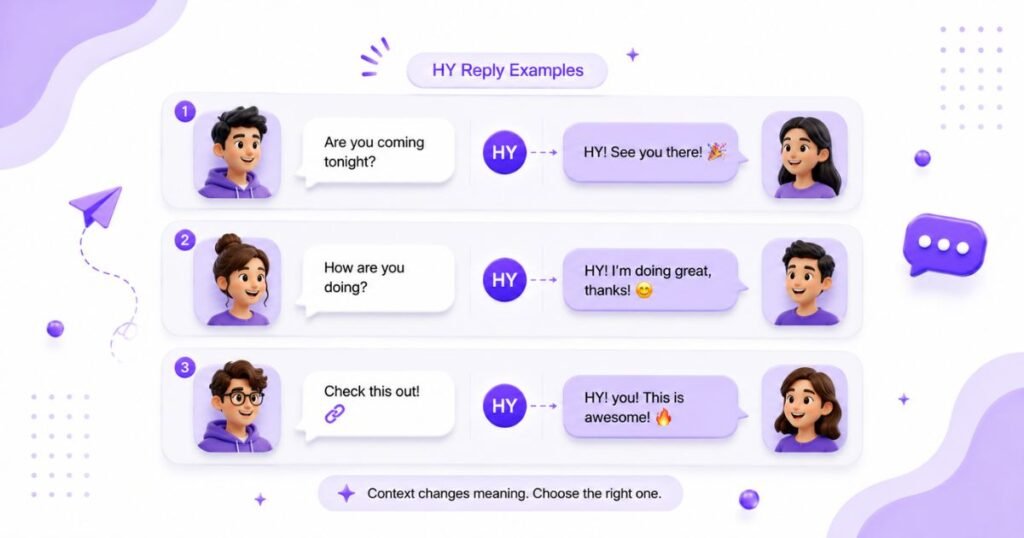
If HY means ‘hell yeah’:
Friend: “Are you coming to the party?”
You: “HY! Can’t wait!”
Friend: “This band is awesome!”
You: “HY! They rock!”
Friend: “Want to grab dinner later?”
You: “HY! I’m starving!”
If HY means “hey” or “hey you”:
Friend: “HY! What’s up?”
You: “Hey! Not much, you?”
Friend: “HY! How’s school?”
You: “Hi! School’s going well!”
Friend: “HY! Got plans for the weekend?”
You: “Hey! Just chilling, you?”
HY Related Terms, Common Mistakes, and Mini Quiz
It resembles several other abbreviated terms. While some may appear alike, they carry distinct meanings.
Related Terms
These are the related terms you must see:
- Yeah: It’s the go-to response for easy acceptance.
- Hell yeah: Perfect for when you want to amp up the energy!
- Heck yeah: A milder, more polite alternative, often used in family-friendly contexts.
- Hey: A simple greeting that opens up communication, often leading to more significant conversations.
- HYD: This abbreviation stands for “How you doing?” It’s a quick, informal way to check in on someone’s well-being.
- HYU: It means Hit You Up, used for contacting someone later..
Common Mistakes
It’s easy to slip into shorthand and miss the nuances. Misunderstanding slang can lead to miscommunication and awkward exchanges.
Mistake: Assuming HY always means one thing.
Correction: Read the full message first.
Mistake: Using HY in a formal message.
Correction: Use ‘yes,’ ‘hello,’ or a complete sentence instead.
Mistake: Confusing HY with HYD.
Correction: Clarify that HY what usually means, while HYD means how you doing.
HY and Other Texting Acronyms Worth Knowing
Abbreviations tend to show up in clusters. Once you’ve figured out HY, chances are you’ll spot a few more shorthand terms in that same conversation. Here are a couple worth knowing:
Conclusion
Understanding abbreviations can enhance your interactions in the fast-paced world of online communication. When someone asks, “What does HY means in chat?” the answer depends on the context. It can mean “Hey,” “Hey You,” “Hell Yeah,” or “Hell Yes.”
This phrase not only serves as an icebreaker but also establishes a friendly tone right from the start. It’s a great way to grab someone’s attention and signal that you’re eager to engage.
The popularity of such abbreviations reflects our evolving communication style, especially in social media and texting.
FAQs
What Does HY Mean in a Text Message?
It can mean various things, including Hey, Hey You, Hell Yeah, Hell Yes. These interpretations reflect casual, informal language commonly used in digital communication.
What is the Full Form of HY?
It can refer to multiple phrases, including “hell yeah,” “hell yes,” and “hey you.” Each phrase has a casual, informal tone, often used in conversations to express enthusiasm or to get someone’s attention.
Does HY Mean “Hey” or “Hell Yeah”?
It can have two meanings depending on context. If used to start a message, it means “Hey.” However, if it’s in response to a question, it signifies “Hell Yeah.” Thus, understanding its use relies on the situation.
What Does HY Mean from a Guy?
The abbreviation from a guy means “hey,” “hey you,” or “hell yeah.” It can serve as a casual greeting or an enthusiastic affirmation in conversation.
What Does HY Mean from a Girl?
The term from a girl can mean various things, such as “hey,” “hey you,” or “hell yeah.” The context in which it is used can help clarify its specific meaning.
Can I Use HY in Professional Messages?
Using abbreviations like “HY” is generally considered inappropriate. Clear and respectful communication enhances professionalism and ensures effective dialogue.