ATP Meaning Texting: What It Means And How To Use It (2026)

The average teen can have a completely different vocabulary than their parents. Terms like “atp meaning texting” are key in bridging that gap, but they can also create a language barrier between generations.
Slang is a living language, constantly adapting to cultural changes and technological advancements. In this article, we’ll break down the importance of slang in today’s communication and why you should care about what it represents.
Quick Answer
ATP stands for “At This Point,” a versatile acronym that can signify a range of sentiments, from casual acknowledgments to more urgent calls for attention. It can also lead seamlessly into call-related messages like “I need to answer the phone,” giving it an informal twist.
TL;DR
Understanding abbreviations is essential for effective interaction.
- ATP stands for “At This Point,” commonly used in casual texting slang.
- It’s a convenient way to convey the current status or situation, emphasizing timing in conversations.
- It can streamline informal messages, making them punchier and more relatable.
- Using ATP in formal writing may come off as too casual or unprofessional.
- Interpreting ATP correctly can enhance clarity, especially in group chats or casual exchanges.
- Users should be mindful of their audience; what works in a text may not translate well in business emails or official communications.
Embracing this understanding can improve your conversational skills and help you resonate better with diverse audiences.
What ATP Means in Texting
This slang in texting stands for “At This Point.” It’s often used to express a feeling or decision about a situation. For example, if someone texts ATP I’m staying home, it might show their acceptance of feeling tired or frustrated.
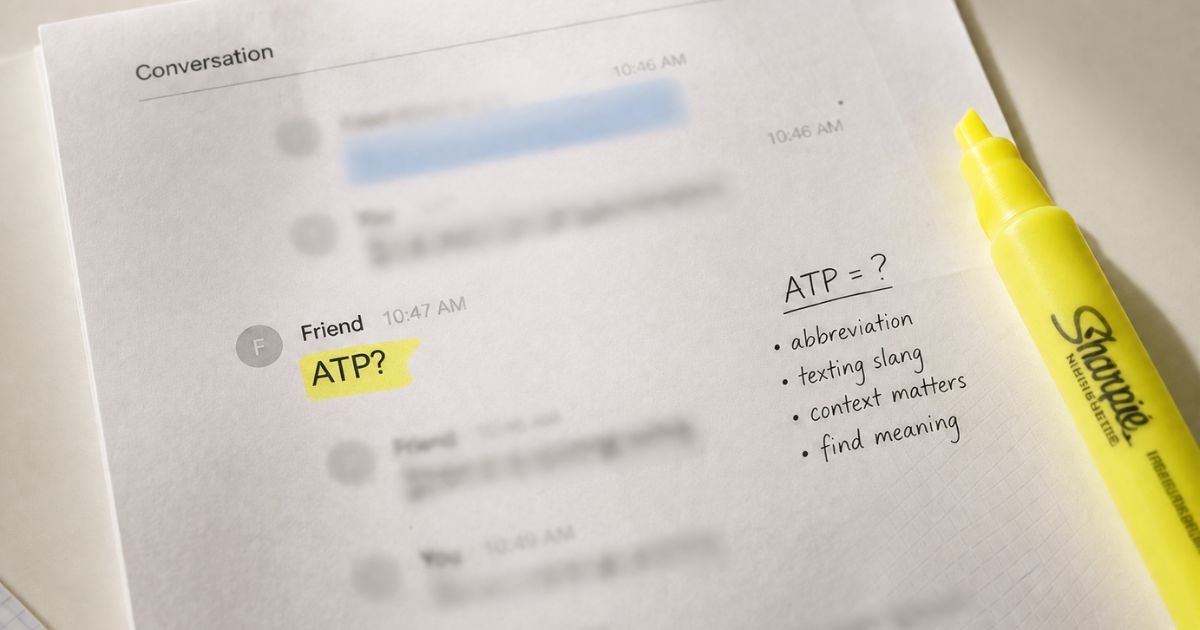
Using ATP can help convey honesty about where someone stands emotionally, making conversations more real and relatable. When we use ATP, it gives a clearer picture of our reactions to everyday challenges.
ATP Meaning in Plain English
It stands for “at this point” in a simple way. In the world of texting, people use it to describe their current feeling or attitude about something.
Using ATP helps keep conversations clear and focused. It’s a quick way to express where you stand without needing lengthy explanations.
Is ATP Slang or Standard English?
It is an abbreviation that stands for “at this point.” You often see it in casual conversations on chat apps or in texts. It’s a part of the online slang language that has become popular, especially among younger users.

It not fit well in formal writing, like a school paper or a cover letter. Using ATP in a work message or professional context may confuse your audience. In standard English, it’s better to spell out phrases to ensure clarity, especially when you are communicating with someone who isn’t familiar with the slang.
Pronunciation and Part of Speech
In casual chats or texting, people often use “ATP” in a different way. Here, it can be an initialism standing for “at this point,” which helps convey thoughts quickly in some casual message shorthand.
When you’re using ATP as a noun in texting, it represents a specific moment in time like when you’re sharing your current feelings or status. As a verb, some may creatively twist its meaning to express action, like “Let’s ATP our plans,” suggesting it’s time to decide what’s next.
When ATP Means “At This Point”
It captures the essence of a person’s current state and feelings. This simple abbreviation can convey a range of emotions and tones, reflecting how someone is feeling whether they are annoyed, tired, calm, or even resigned.

Examples:
- “ATP, I don’t think we’ll make it to the party.”
- “I’m just tired of waiting, ATP.”
- “ATP, it feels like we’re going in circles.”
- “Honestly, ATP, I’m okay with whatever.”
- “ATP, let’s make a final decision soon.”
You can express your current feelings succinctly iy integrating this phrase into conversations. It can serve as a way to regroup and address the present moment, helping both parties understand where they stand. This clarity can be refreshing in the fast-paced world of texting.
When ATP Means “Answer the Phone”
Sometimes, it stands for “Answer the Phone.” It can feel overwhelming when your phone rings, especially with so many distractions around. Responding quickly can show that you care about the person on the other end.
When someone calls you, it’s usually because they feel a sense of urgency or want to share something important.
- A friend called to ask for advice before a big test.
- Your boss called to discuss a project with a tight deadline.
- A family member called to share exciting news.
Taking a moment to pick up the call can strengthen your relationship and offer support. A quick response often brings a feeling of connection that other forms of communication can’t.
Common Contexts Where You May See ATP
You may come across ATP in various casual digital spaces. The acronym often pops up when chatting with friends on platforms like Snapchat or in group chats. Here, ATP can mean “at the present time,” making it easy to share your current status or thoughts quickly.
It’s a way to keep the conversation flowing without adding unnecessary complexity. You might see ATP used in public comments or casual posts in text messages and social media platforms like Instagram and TikTok.
This helps create a direct conversation vibe among users, allowing everyone to understand what’s happening in a quick, relatable manner.
How to Use ATP Naturally
It can be used in informal speech when you want to use “at this point. Clarifies an opinion, decision or circumstance without repeating entire phrase.

Let’s look at some naturally occurring instances of:
- All I can do is wait and see what they have to say, ATP.
- I’m not sure it’s going to be done ATP.
- The news that we are all familiar with is ATP.
- I’m too tired to go out ATP.
- ATP, it’s better to move on.
Remember ATP is primarily used in written informal messages like text messages and in social media. It is better to say “at this time” or “at this point”, in e-mail or a report at School or at work.
When Not to Use ATP
It can be tempting in casual conversations or texts, but it may not belong in professional writing. When crafting formal emails, essays, or job materials, it’s better to use the full phrase instead.
This helps ensure your message is clear, especially for older readers or mixed audiences who may not be familiar with the slang. Every word counts in professional settings. Relying on shortcuts like ATP can make your writing feel rushed or informal.
ATP Related Terms, Synonyms, and Common Confusions
ATP, or adenosine triphosphate, is often referred to simply as the “energy currency” of the cell in biology. At this stage, when discussing it, it’s important to note that while many people might think of it just as a term in textbooks, ATP plays a vital role in our everyday lives, powering everything from muscle movement to cellular repair.
By now, you’re likely familiar with some common synonyms like “energy molecule” or “cellular fuel,” yet it’s intriguing to explore how its significance extends beyond science into chat slang. For example, when someone says they need “some ATP” in a casual text, it’s an amusing way to express their need for energy or motivation.
At this point, let’s dive into some common confusions. One might wonder why it is often misunderstood or misused in conversations, especially when relating it to fitness or productivity. Some people mistakenly equate it with mere exercise supplements, thinking of it more as an antonym to fatigue.
Examples of ATP in Real-Life Messages
Here are some everyday examples that illustrate how these can manifest in real-life
- “ATP, I think we should move forward with the project.”
Meaning: At this point, it seems appropriate to proceed.
- “Can we finalize the details? ATP, we can’t keep delaying.”
Meaning: Right now, it’s crucial to make a decision.
- “I need your input, ATP.”
Meaning: At this moment, your feedback is essential.
Using ATP in conversations adds urgency and clarity. Saying “ATP, we need to agree on a deadline” emphasizes that it’s critical to reach a consensus now. Similarly, when someone states, “I’ve already sent you the files, ATP,” they mean that at this time, action is required on your part.
These examples show how ATP can streamline communication, ensuring everyone is on the same page.
Common Mistakes With ATP
In technical documents, using the abbreviation ATP without first defining it can confuse readers who may not be familiar with the terminology. Another frequent oversight is the inconsistency in using the full phrase versus the abbreviation.
Mini Quiz
Question 1: What does “ATP” most commonly mean in texting?
a) All Time Points
b) At This Point
c) Ask The Parents
d) After The Party
Question 2: Which sentence uses ATP correctly?
a) “ATP, I’m just tired of waiting for a reply.”
b) “ATP she is my best friend since 2010.”
c) “Happy ATP to you!”
d) “ATP means adenosine triphosphate.”
Question 3: Where should you probably avoid using ATP?
a) A group chat with friends
b) A casual text to your sibling
c) A formal business email
d) A meme caption
Question 4: True or False: ATP can also lead into a message like “I need to answer the phone.”
a) True
b) False
Question 5: What’s the main reason slang like ATP exists?
a) To confuse older generations on purpose
b) To make informal communication quicker and more relatable
c) To replace all formal language entirely
d) It has no real purpose
Answer Key:
Question 1: b) At This Point
Question 2: a) “ATP, I’m just tired of waiting for a reply.”
Question 3: c) A formal business email
Question 4: a) True
Question 5: b) To make informal communication quicker and more relatable
ATP vs Similar Slang
Lets take a look on other slangs too:
| Term | Meaning | Best Used For |
|---|---|---|
| Green FN | A perfect shot or move | Hyping up a good play |
| PMO | Pisses me off | Venting about something annoying |
| WSG | What’s good (a greeting) | Starting a chat |
| HY | How you (doing) | Checking in on someone |
| IRL | In real life | Talking about offline stuff |
| MYF | Mind your feelings | Softening a harsh truth |
Conclusion
ATP meaning texting encapsulates the essence of modern communication by providing a simple yet powerful tool for clarifying and contextualizing discussions. Embracing such abbreviations helps create a more fluid and dynamic texting experience, bridging gaps that may otherwise hinder interpersonal connections.
The next time you find yourself typing a lengthy message, remember the power of simplicity and the utility of ATP.
FAQs
What Does ATP Mean in Texting?
It stands for “At This Point,” a phrase that succinctly captures the essence of current feelings or situations. It’s often employed when someone wants to convey a sense of urgency or clarity about a developing scenario.
Can ATP Mean “Answer the Phone”?
It is traditionally recognized as adenosine triphosphate in the world of biology, takes on a new life in your personal and professional relationships when used to signify “answer the phone.” This reinterpretation transforms a simple action into a call for connection.
Is ATP Slang?
Yes it is, it has seamlessly woven itself into the fabric of online communication, particularly among younger generations. Its usage reflects a shift in how we condense complex feelings and ideas into brevity, making conversations more dynamic.
What Does ATP Mean On TikTok?
ATP on TikTok stands for “answer the phone,” a popular trend that encourages users to engage in conversations and respond creatively to specific questions or challenges.
How Do I Know Which ATP Meaning Fits?
Understanding the surrounding subject matter can lead you to the correct interpretation whether in biology, sports, or finance. For example, in cellular biology, it represents adenosine triphosphate while in sports, it points to the Association of Tennis Professionals.
How Should I Reply If Someone Texts ATP?
Your response can set the tone for the interaction. If you’re uncertain of the intent, consider replying with an open-ended question, like “Are you asking about a specific topic related to ATP?” This not only clarifies but shows your willingness to engage deeply.